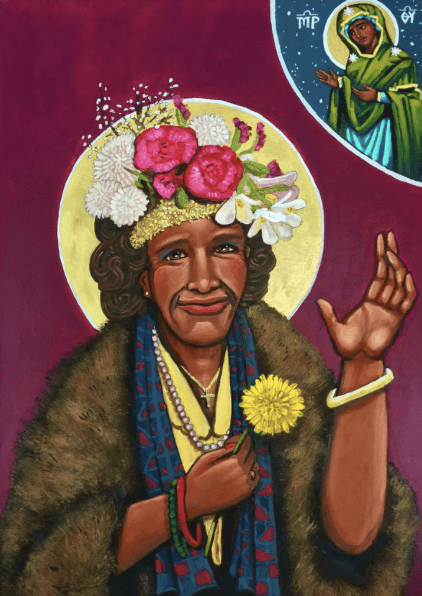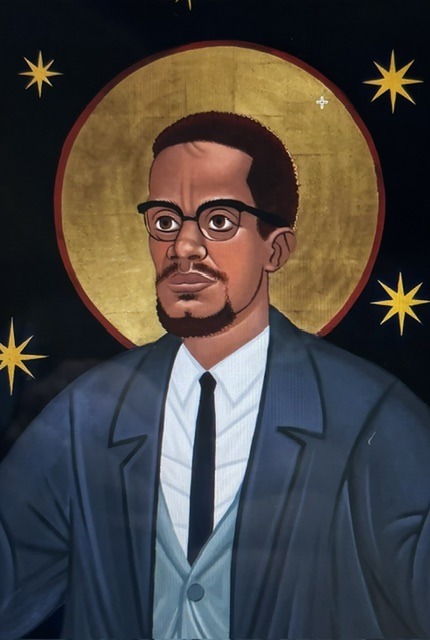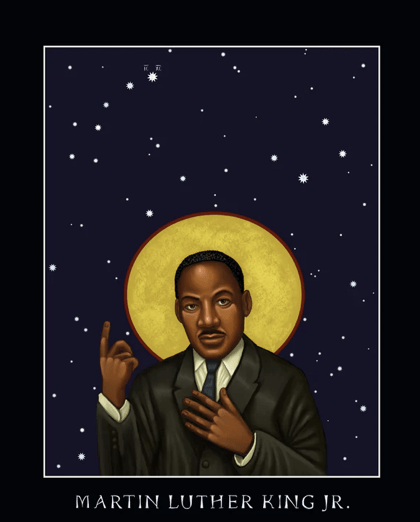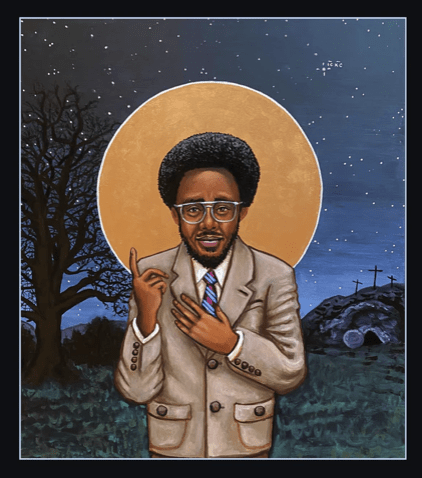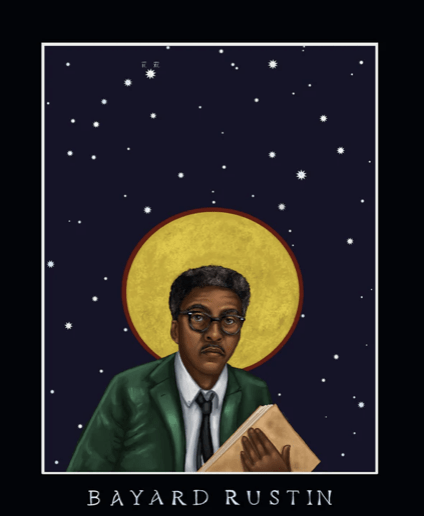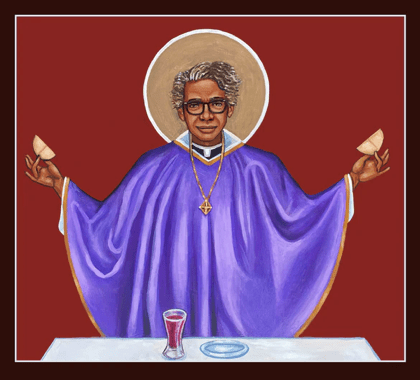
Lawyer, activist, poet, priest.
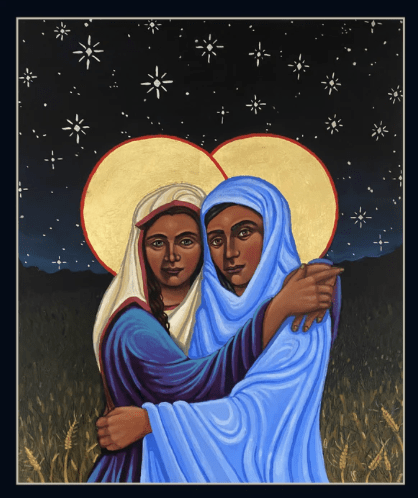
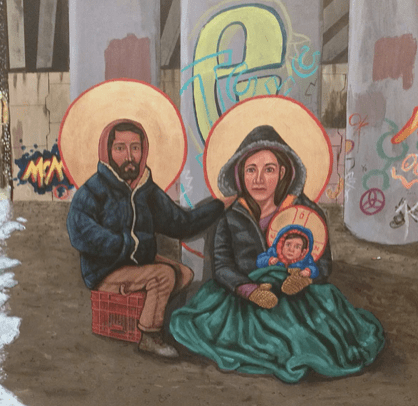
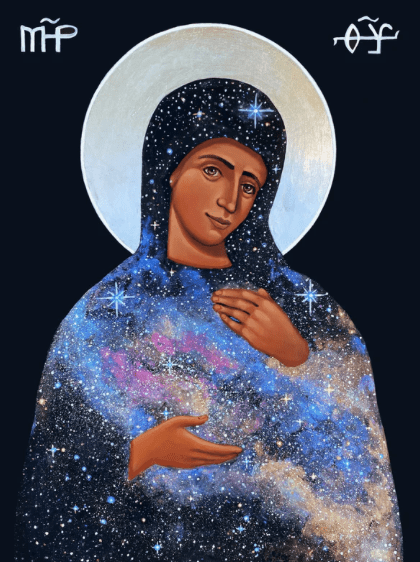
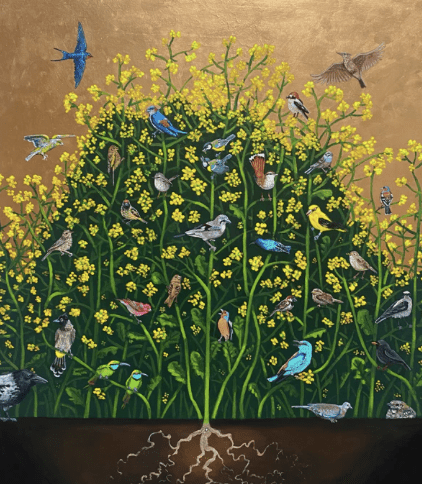
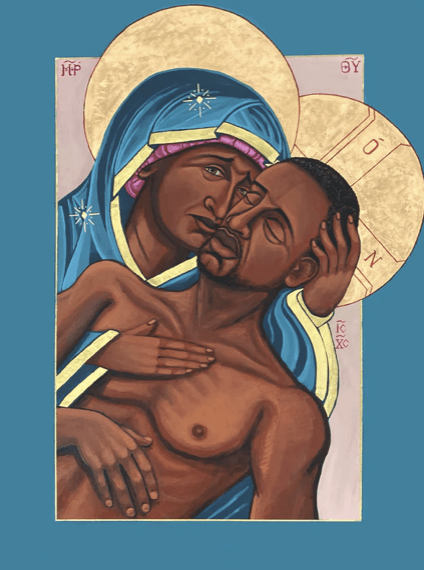
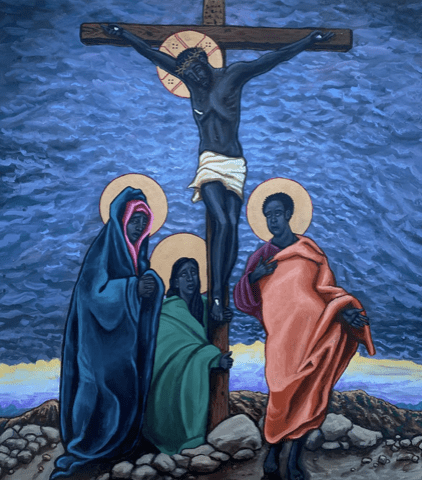
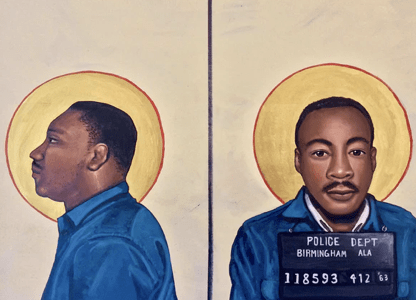
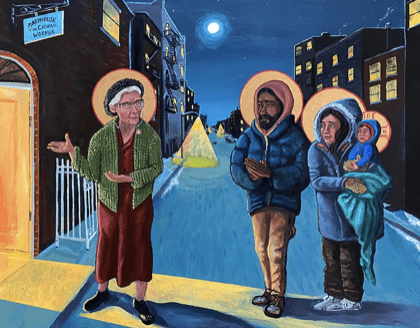
Icon by Kelly Latimore | Text by Sundee Frazier
PRAYER
God who is One, who embraces and includes all of our earthly dichotomies, in this world that creates opposites where there are none, that is fractured and demands we fracture ourselves to be accepted, show us how to gather up all the fragments, as our sibling Pauli Murray did, and hold them tenderly but fiercely, as we live wholly not only for ourselves but others. For those who are weary from being “the first” or from the fight against injustice, grant them rest, buoy their spirits, be the bulwark that guards them from the flood of others’ skepticism, criticism, and resistance. Be the solid inner framework that allows us to stand in our power, gifting, and abilities. Help us to resist oppression everywhere by offering our bodies and our minds—through writing, speaking, doing, being—to be a thorn in the side of those in power who refuse to break down hierarchies, but subordinate some so others can remain on top. Stoke a fire in our fingers, bellies, and feet, and put a song of hope in our throats, that we might continue in the work of creating spaces where each person can express their wholeness and be accepted as they are. Make us one, as you are one. Amen.
GROUNDING
A thorn in the side of those in power. A beautiful rose in the eye of their Creator.
Born of Black and white, feeling like a man in a woman’s body . . . they held this world’s “opposites” in their soul. They were born to break down barriers and divisions, to exhibit a life devoted to wholeness.
Pauli chose their own name—one act of self-determination among many. Their aunt-turned-mother called Pauli her “little boy-girl,” a declaration of acceptance that gave Pauli fertile soil from which to bloom.
Raised in North Carolina, Pauli was no stranger to discrimination. They fled to New York to attend Hunter College but were heartbroken to find the same racial hierarchy ruled.
With fiery spirit and strategic mind, Pauli entered Howard Law School, determined to do something about this unfairness, but now gender became the obstacle. In spite of men’s exclusion, Pauli became the top student, earning what should have been the right to attend Harvard. Pauli was barred because of being a woman.
And the fire continued to build.
Pauli wrote, “I intend to do my part [to end injustice] through the power of persuasion and spiritual resistance, by the power of my pen and by inviting violence on my own body.”
In the 1940s, Pauli organized lunch counter sit-ins and went to jail for refusing a seat in the back of the bus. Before Greensboro. Before Rosa.
They were the movement that preceded the Movement.
Pauli said, “One person plus one typewriter constitutes a movement,” and they lived this out.
A fire burned in fingers that typed letters, poems, books, and eventually legal briefs and presidential commission reports:
- Letters that got the attention of Eleanor Roosevelt, who became a good friend.
- Arguments used by Thurgood Marshall to dismantle Jim Crow segregation and by RBG to win a Supreme Court victory against gender discrimination.
- Reports that became the foundation for the passage of the Civil Rights Act of 1964.
- Briefs that made it possible for Black men, and women of any race, to serve on juries.
- A poem (“Dark Testament”) read at the funeral of Dr. Martin Luther King, Jr.
Pauli became the first Black person to earn a judicial doctorate at Yale (in 1965) and was among the first group of women to be ordained in the Episcopal Church (in 1977).
Born left-handed, they became ambidextrous.
Embracing of both.
Black/white. Male/female.
Lived life with both hands flung wide to say ALL are equal, ALL deserve the freedom America promises, ALL deserve to be treated justly.
Wrote, “Hope is a song in a weary throat” and sang that song their whole life long.